.

Showing posts with label health care. Show all posts

Corporate Socialism?

General Motors Institute - an example of Corporate Socialism

There is a lot of talk today about "Socialism" in America.  But only a few decades ago, we lived in an era of Corporate Socialism.  Was that any better or worse?

The image above is of the hallowed, ivy-covered halls of my alma mater, General Motors Institute, a five-year co-op Engineer school in Flint, Michigan, now called Kettering University.  GM has downsized and running your own college was one of the first things they got rid of.

It seems so odd and quaint now, in retrospect - a major corporation running its own Engineering College.  And yet, back in the day, GMI was a well-respected institution, known for turning out smart and experienced graduates who had real hands-on experience in industry.

Did GM make money from this school?  Hardly.  While it did provide them with a steady stream of skilled Engineers, probably more than half who went there went on to work for competitors or other industries.  It was a luxury that GM could afford - a bit of corporate socialism from a bygone era.

And back then, most corporations worked this way.  For starters, most corporations back then offered what amounted to lifetime employment.  You got a job with IBM, you wore the blue suit and expected to work there for life - retiring with a gold watch, a pension, and fully paid-for health care.

Oh, yes, health care.  A big issue in today's national debate.  Socialism, the critics call it.  But back in the day, most major corporations offered "Cadillac" health care plans, particularly if you worked at Cadillac.  These plans paid for medical, dental, and even eyeglasses, with little or no deduction or co-pay.

And one reason health care costs have skyrocketed in this country is that most workers who got these benefits took it for granted that "everything was paid for" and thus had no incentive to shop medical services on price, where it was appropriate.

Our tax system, of course, encouraged this.  An employer can pay an employee more, in terms of benefits, as they are untaxed.  So a dollar in pay means the employer pays $1.18 with withholding and that the employee gets 60 cents, if that.  But a dollar in health care equates to a dollar in the employee's pocket, if they have a family and use the service.

It was corporate socialism, pure and simple.  The company would "take care of you" so long as you worked there and danced to their tune.  It insured loyalty from workers in return.  It was not such a bad system, in retrospect.

And corporate socialism went far beyond mere health care.  Many corporations back then had tuition reimbursement programs, which I took advantage of at United Technologies.  They paid me to go to school.

Similarly, most companies had retirement programs or investment programs, to allow you to save for retirement.   We also had a "bond drive" to encourage workers to save money by buying savings bonds.  And we did the United Way campaign every year, to encourage workers to give to charity.  In fact we did a lot of things, and occasionally got around to making cars.

When I was at GM, we used to call the company "Generous Mothers" as it seemed like a benevolent giant, taking care of us.  At age 18, we had health insurance, a retirement plan, a steady salary, a place to live and a job.  And on top of that, we got huge discounts on brand new cars.  We clutched the warm bosom of the almighty Generous Mother tightly.

Times have changed dramatically since those days.  Today, GM is emerging from bankruptcy, and instead of being a "Generous Mother" she is more of a spiteful child-abuser.  Not that GM is any different than anyone else in that regard.  Today, in order to "compete on a global basis" we have to slash benefits, salaries, and move work offshore.  GMI was sold off, and tuition reimbursement plans are largely a thing of the past at other companies.  Generous pensions and retirement plans have been replaced with self-funded 401(k) plans, putting the onus on workers to fund their own retirement.

And lifetime employment?  A joke, these days.  Most workers expect to be laid off or change jobs every  5-10 years.  No one expects to "retire" from a company after 30 years of service and receive a pension.  Only schoolteachers and government workers even have a shot at that - and even then....

And yet today, these same people who are getting the screw-job are the same ones down on the mall in Washington, protesting as "Teabaggers" that America is turning into a Socialist State!

No offense, but I respectfully disagree.  If anything, America in the 1950's through the 1980's was a Socialist State, and now is in the process of reverting to 3rd world status.  And yet the people most affected by this are cheering on our decline.  They want not a return to the glory days of the 1960's, but to make things even harsher for Americans - to toss people out onto the streets and deny them medical care.  In other words, how many 3rd world countries treat their citizens (or at least how they used to).

Gone forever are the cushy, lifetime jobs that companies like Xerox, Kodak, IBM, GM, and others offered.  Today, we are offered, at best, only part-time temporary employment, with no benefits.  Or you can become, like me, a self-employed "contractor" responsible for his own taxes, retirement, and health care, making little more than someone on the inside does.  It all sounds so glamorous until you realize that health care costs between age 55 and age 65 could top $10,000 to $20,000 a year.

The question is, how did we get to this state?  And why?  Why are the very people - the middle class - who were beneficiaries of the corporate welfare state, now pushing back against government "socialism"?

It is an interesting question, and I believe that it probably is another example of Baiting.  The teabaggers are upset, as their standard of living has diminished.  Their jobs are being sent overseas, because costs are lower.  They need a scapegoat - a culprit - to blame it all on.   So they seize upon "high taxes" and "socialism" as codewords.  Their problems, they believe, are caused by those "other" people on welfare, taking all of their tax dollars.  And we all know what those are code words for.

It is an interesting strategy by the powers-that-be, whose incomes in the rarefied brackets have skyrocketed during this downturn in the economy.  After all, like the plantation owners before them, it is much more profitable and safer to get the poor white trash riled up against the blacks, than to have them marching on the plantation, demanding their own share of the wealth.  Not only can you divert their anger toward a scapegoat minority, you can get them to go into battle and do your bidding - without them ever realizing that they are fighting against their own interests.

The rebel soldiers of the Civil War were not "heros" but fools - dying for a cause that was not their own, and fighting against their own self-interests.  The net result of the Civil war, was that the plantation owners returned to their plantations, decorated with medals and honors, while the fighting men - those that survived, returned to nothing but destitution and poverty.

Not surprisingly, many "teabaggers" also embrace the mythology of the rebel "cause" and "heritage" as a sacred sacrifice.  And today, we see history repeat itself as another ruling class cynically manipulates public opinion among this class of people to get them to work against their own self-interest.

Here's a hint to anyone wanting to take up a political "cause": Figure out whether it really is in your own best interests to take up someone else's banner, or whether, perhaps, you are being baited and riled up, in order to serve someone else's agenda.

The days of Corporate Socialism will probably never return in the USA.  It was a short era - perhaps only a few decades long.  I am glad I got to see the waning days of that era - an era of empire.  And I'm sorry I didn't appreciate it while it lasted.

It is gone forever, and what lies ahead may be very scary, indeed.
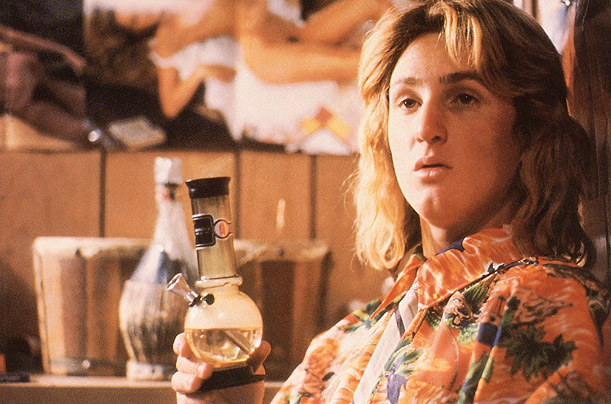
Legalized marijuana! How is that going to play out?

Whoa, dude!  Legalized marijuana!  How is that going to play out?

Marijuana for recreational use (as opposed to industrial use) is now legal in Colorado.  How is this going to play out?

I have expressed my views on pot before.  Yea, it saps the life blood out of people - particularly when you are young and trying to get ahead.   Pot smokers are more likely to see themselves as passive victims of external forces, rather than proactive people who take charge of their lives.  But as I noted in my many postings, you can't tell a po-thead anything, so don't bother wasting your breath on that issue.

And part of me wants to see how this experiment works out.  After all, just as prohibition expanded the role of organized crime in the USA, the illegalization (word?) of marijuana has lead to a lot of criminal activity both here and around the world.

It also will be interesting to see how it plays out with regard to the users.  Will they be the responsible stoners that claim they will be?  Now that pot is legal in Colorado, will their legal troubles be behind them?  Or, will their lives continue to be a series of "hassles" with authority figures - that turn out to have nothing to do with pot being legal or not, but rather how it affects their brains.

Like I said, it is an interesting experiment, and the pro-legalization forces will have a lot to prove.

From a practical standpoint, there are still going to a whole lot of problems.  Marijuana is still illegal on a Federal level, and while the present administration might decide not to enforce the laws in Colorado, you can be sure they will do elsewhere.   And bear in mind the present administration said they wouldn't bust medical marijuana dispensaries, but went ahead and did, anyway - and then changed their mind yet again.

Can you imagine how this will play out if the GOP takes the White House?   The legalization in Colorado may become meaningless in short order, if the Feds decide to enforce Federal Law in the State.

But taking that aside, what is going to happen?

Denver Airport has already announced that they will fine anyone carrying marijuana through the airport - if they are searched for some other reason and marijuana is found.  The fine is a whopping $900, which to a lot of pot smugglers is chump change.

Yea, pot smugglers.   It doesn't take a lot of imagination to figure out that a LOT of people are going to fly, drive or walk to Colorado and buy "legal" marijuana and bring it back to their home States.   This will surely piss off the drug cartels in Mexico, but they still have the lucrative cocaine business to deal with.

Speaking of which, another aspect of this experiment will be to see whether legalized marijuana leads to more consumption of other drugs.   In other words, the legalization folks will be able to show whether marijuana is a "gateway" drug or not.   Stay tuned, it will be interesting.

There is also the issue of products liability.  One article already notes that some companies are offering "marijuana tours" of the State and mentions that one couple on the tour "got so paranoid, we had to take them back to their hotel room."   The marijuana of today is very potent compared to years ago.   Will people be able to sue for a bum trip?   Interesting possibility.  What about the liability of a dispensary who sells to a mentally disturbed person?  Or if someone tokes up and wrecks their car - is the dispensary liable as a bartender would be?

And do they have to put warning labels on the packaging - like the cigarette people do?  Smoking anything is bad for your lungs - is marijuana exempted from this?   And who handles quality control?  Do they monitor THC and other content and is this printed on the packaging - or should it be?   A lot of questions, to be sure.  When you productize marijuana, it has to pass the basic safety tests that other products have to.

But getting back to smuggling - the worst that can happen in the Denver Airport is you are fined $900 and they take your pot.  OK, that's cool.   But what about when you land in Dallas or LA?   Will there be drug sniffing dogs meeting flights from Colorado?   It would seem like a no-brainer from the viewpoint of law enforcement.

And if you drive to Colorado, you can be sure the police in Nebraska, Kansas, Utah, New Mexico, and Wyoming will be waiting at the border to search cars that look suspicious.   Think I'm kidding?  They already do this at the State lines and near Indian reservations to search for illegal fireworks.   All it takes is one broken taillight for a Tarry-type stop, and a drug sniffing dog for "probable cause" for a search.

But those sort of risks are already know to drug smugglers today, so I doubt it would deter them.   What remains to be seen is whether the supply in Colorado will replace illegally imported marijuana currently coming into the country.   Rather than crossing an International border, smugglers need only cross a State Line - and that is pretty easy.  So I think you will see importation of marijuana from other countries drop off the map.  Why bother when you can just move it from State to State?   And it is such a hassle to smuggle across borders, due to its bulk.

I just got done reading Last Call: The Rise and Fall of Prohibition by Daniel Okrent.  In that book, he describes how ridiculously easy it was to smuggle booze across the border from Canada.  Prohibition, in addition to making the Mafia a national organization, also created the house of Segram.   The Canadians were making a lot of booze - more than enough for every man, woman, and child in Canada.  It was the worst-kept secret that the huge excess was crossing the border into the States.

Similarly, one wonders what will happen when marijuana production in Colorado skyrockets, and it becomes embarrassingly clear that a majority of production in Colorado will be for "export" to other States.

I think, at first, it will be like prohibition was.  In the early days, people drove their boats across the river into Canada (or even drove across the ice in the Winter) loaded up with a case or two for their own consumption, and then drove home.

But more ambitious operators made a business of it.  And pretty soon, there was a lot of competition for the business - and fights for control of the distribution of booze.   And organized crime stepped into the picture, marking out "territories" for distribution and setting basic ground rules - and killing each other off in turf battles.

This is already going on in some cities today - as gang members vie for control of distribution territories for drugs, including marijuana.  I wonder how they will feel about amateurs taking a cheap flight to Colorado and coming back with a suitcase of pot?

(Note: The new Colorado law limits possession to one ounce.  So a smuggler would have to employ a number of buyers to each buy one ounce at a time, from numerous dispensaries, in order to accumulate enough to export to other States.   While the State Police can't bust people for buying an ounce legally, they could go after people "accumulating" marijuana for smuggling purposes.   It is unclear whether dispensary records could be used to track users and establish consumption patterns.   A person buying several ounces a day would certainly raise eyebrows, if the records could be reviewed or subpoenaed.    Will smugglers hire non-users to buy marijuana for them?  This would not be illegal, as you can "gift" an ounce to another person, after you buy it.   Perhaps Granny might derive a second income by being a straw-man in such transactions.   The law raises more enforcement questions than it answers!)

Like I said, it is an interesting experiment.   And these sorts of ancillary problems are the result of marijuana being legal only at the State level, for the time being, anyway, and our crazy patchwork of laws from State to State.

The new law forbids smoking pot in public - just as public consumption of alcoholic beverages is generally illegal.  But what about in a bar?  Or does that go against the general ban on smoking (I checked, Colorado Statute 25-14-204 covers "tobacco and marijuana smoke").   So no pot bars, unless they have an outdoor enclosed patio - or is that smoking pot in public?

There are other foreseeable problems as well.   Many employers now require prospective employees to take a urine test - and randomly test existing employees as well.   For some jobs involving security issues and the like, such tests are required.  I know a fellow who lost a job as a safety inspector, in Colorado, after failing a urine test.   Does he get his job back, now?

I don't think so.  While marijuana may be legal in the State, I don't think the law requires employers to hire pot smokers.   So while you may have the right to use the drug, your use of it may limit your options, in terms of employment and economic success.

Again, it will be interesting to see how this plays out - will someone sue over this, claiming that an employer cannot discriminate based on legal drug use?   I am not sure they will have much of a case.   But laws can be changed, as the Colorado legalization initiative illustrates.

Some are arguing that Colorado may become America's Amsterdam - with pot tourists flying into the State for a marijuana vacation.   I am not sure if this is going to play out or not, as marijuana is pretty readily available as it is (at leas the people who smoke it never seem to have trouble finding it) and flying to a State just for a weekend high seems kind of costly.

But it will be interesting to see if resorts and bars and other establishments offer the drug - or have licensed dispensaries located within or nearby.   It will be interesting to see if licensed dispensaries crop up in border towns - just as liquor stores do near the borders of dry counties.   Back when the drinking age was raised (State-by-State) to 21, some States lagged behind.  Many New York teens would drive to Connecticut to buy booze, with predicable results (drunk driving accidents).  Will similar things happen to thrill-seeking kids in Nebraska.

Which brings up another interesting question - drug use by youth.   Teenagers are a huge market for marijuana as it is.  While the Colorado law limits the drug to those 21 and over, will there be "leakage" into the youth market, via intermediate buyers, fake IDs, and the like?  Will the Police setup sting operations to see if a dispensary will sell to a minor (I'm betting they will, as they do this for alcohol now).   Will drug use rise among teenagers?   And if so, how will this affect school performance, grades, etc.?  It will be interesting to watch.

These are just a few issues that I can think of, off the top of my head.  I am sure there will be others that crop up as well.  It is an interesting experiment, and both sides of this debate will no doubt use the results to "prove" their point of view is correct.

Good luck, stoners!   You'll probably need it.....